

As pet owners, we go to great lengths to keep our companions safe, from picking the perfect kibble to finding the sturdiest leash. But there is a silent, microscopic threat that doesn’t care how well-behaved your dog is or if your cat never leaves the living room: Heartworm disease. It only takes a single bite from an infected mosquito to change a pet’s life forever. While the science behind these parasites can feel overwhelming, and the thought of them is certainly scary, the good news is that heartworm is almost 100% preventable. In this guide, we’re having a “heart to heart” about how this disease works, why dogs and cats face different risks, and why a small monthly habit is the most loving investment you can make for your pet’s future.
Heartworm disease is a serious and potentially fatal condition caused by parasitic worms (Dirofilaria immitis) that live in the heart, lungs, and associated blood vessels of affected pets. While both dogs and cats can get heartworms, the disease manifests differently in each.
How Heartworm is Transmitted
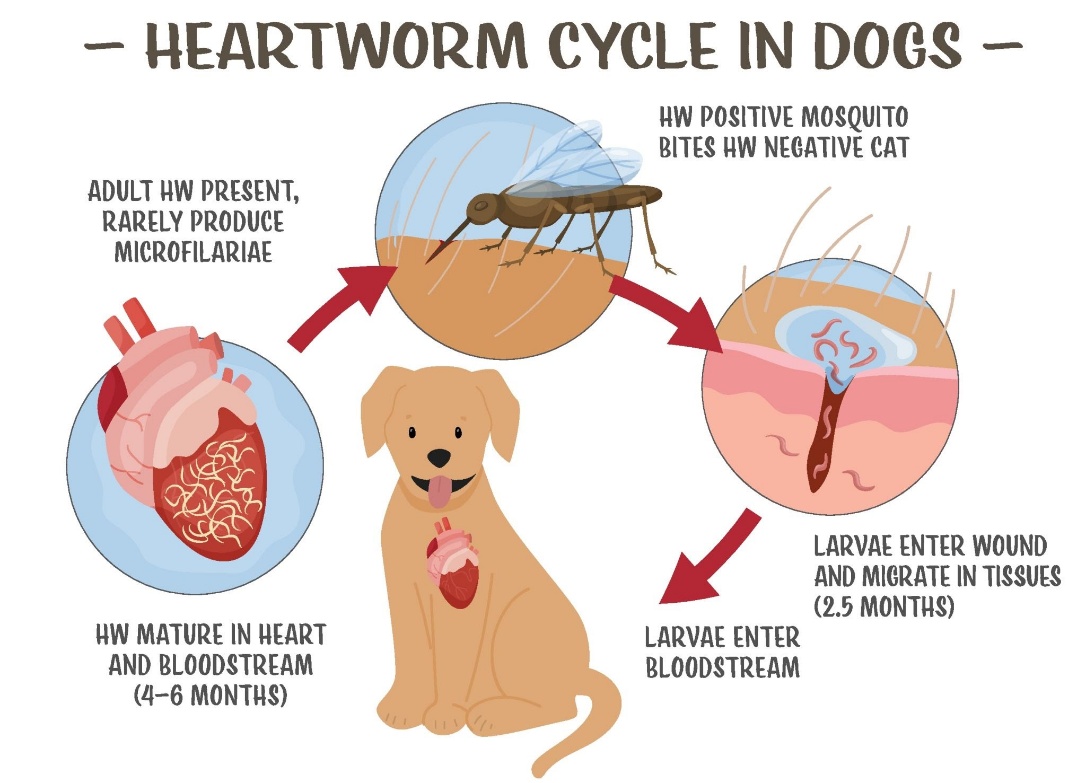
The disease is spread exclusively through the bite of an infected mosquito. When a mosquito bites an animal carrying microscopic baby worms (microfilariae), it picks them up. After developing inside the mosquito for 10 to 14 days, the larvae are transmitted to the next dog or cat the mosquito bites.
Heartworm in Dogs vs. Cats
| Feature | Dogs (The Natural Host) | Cats (The Atypical Host) |
| Worm Survival | Worms easily mature into adults, mate, and produce offspring. | Most worms do not survive to the adult stage. |
| Worm Count | Can have hundreds of worms (up to 30 cm long). | Usually only 1 to 3 adult worms. |
| Diagnosis | Easily detected with a standard blood test. | Harder to detect; often requires multiple types of tests. |
| Treatment | An FDA-approved drug treatment exists to kill adult worms. | No approved drug treatment for adult worms in cats. |
Symptoms to Watch For
In Dogs:
In the early stages, many dogs show no symptoms. As the disease progresses, you may notice:
- A persistent, soft cough.
- Reluctance to exercise or tired easily after mild activity.
- Decreased appetite and weight loss.
- Swollen belly (due to excess fluid from heart failure) in advanced stages.
In Cats:
Symptoms in cats can be very subtle or very sudden. They often mimic asthma or bronchitis, a condition known as HARD (Heartworm Associated Respiratory Disease):
- Coughing or wheezing (resembling asthma attacks).
- Intermittent vomiting (sometimes unrelated to food).
- Sudden onset of collapse or respiratory distress.
- Sudden death (this is sometimes the first and only sign in cats).
Prevention: The Only Real Cure
Because treatment for dogs is expensive and physically taxing, and because there is no treatment for cats, prevention is the most critical step for any pet owner.
- Yearly Testing: Even if your pet is on prevention, annual testing ensures the medication is working.
- Monthly Preventatives: These come in chewable tablets, topical “spot-on” liquids, or 6-to-12-month injectables administered by a vet.
- Avoiding the formation of stagnant water. Standing water is the primary breeding ground for mosquitoes, the very insects responsible for transmitting heartworm disease to our pets. Even a tiny amount of stagnant water can host hundreds of mosquito larvae. By regularly draining these “nurseries” around your home, farm, or business, you are performing the first and most effective line of defense in pest control. Eliminating standing water doesn’t just make your backyard more comfortable for a summer BBQ; it directly reduces the population of disease-carrying insects that threaten the health of your dogs and cats.
- Indoor vs. Outdoor: Indoor pets remain vulnerable since mosquitoes often enter homes.
Stop By for a Consultation!
Heartworm prevention medication requires a prescription from your veterinarian; however, we are here to help you with the critical first step: keeping the mosquitoes away. Safeguarding your pet requires a comprehensive approach. We invite you to explore our selection of topical repellents and specialized shampoos. Regardless of whether your companion baby is a discerning cat or an active dog, our team can assist you in identifying appropriate supplemental products to complement your veterinarian’s prevention strategy.
Let’s work together to keep our community’s paws healthy and bite-free!

Dr. APGC
Dedicated to Veterinary Excellence & Pet Safety